Biddy
Great ExpectationsBiddy is Pip’s orphaned first teacher, a resourceful learner and caregiver whose affection for him does not depend on his rise in status. Her patient instruction and practical kindness run quietly against Pip’s growing shame of his home and his fixation on Estella; in the end, she builds a life with Joe and welcomes Pip back as a friend, embodying the steady loyalties he had once neglected.
Identity and Background
Biddy is the orphaned granddaughter of Mr. Wopsle’s great-aunt, who keeps both a small school and a general shop in the same room. Her precise relationship to Mr. Wopsle is left uncertain even to Pip. Like him, she has been brought up by hand. At first he notices her untidy hair, hands that need washing, and shoes that need mending, but this early description is qualified by the improvement he later observes in her appearance and circumstances.
The shop’s owner has little knowledge of its stock or prices, so Biddy effectively manages its transactions through a greasy memorandum-book used as a catalogue. This detail introduces her as observant and capable in a setting where formal schooling is limited. Her own learning is not presented as the product of privilege: she has acquired knowledge amid the duties of the school and shop, and she is able to pass it on.
Teacher and Companion
Pip struggles through the alphabet largely by his own efforts, with more help from Biddy than from her grandmother. Letters seem to him a bramble-bush, while the figures repeatedly disguise themselves and defeat recognition. His progress is small but real: he begins to read, write, and cipher on the most elementary scale. Biddy’s contribution is practical and sustained rather than grand; she makes learning available to him in the limited circumstances they share.
After Pip visits Satis House and becomes newly dissatisfied with being common, he resolves to get from Biddy everything she knows so that he can make himself uncommon. He tells her that he has a particular reason for wanting to get on in life and asks her to teach him. She agrees at once and begins within minutes. Their arrangement starts with information from the shop catalogue under the heading of moist sugar, and Biddy lends him a large, old-fashioned capital D to copy. Pip mistakes the letter, modeled on a newspaper heading, for a design for a buckle until she explains it. The scene makes the difference between his urgent aspiration and the modest, concrete materials through which Biddy helps him pursue it.
Later, when Pip tells her he wants to be a gentleman, Biddy reminds him that she was his first teacher. Her quiet remark places their shared past beside his new ambition: she has helped him acquire knowledge, but cannot make the social transformation he imagines. Pip asks her not to omit opportunities to help Joe improve as well, revealing his continuing reliance on her judgment and good will even as he grows apart from the forge.
Care, Work, and Independence
After Mrs. Joe’s injury, her temper improves, though she is left with tremulous uncertainty in her limbs and periodic spells of gloomy mental disturbance. When Mr. Wopsle’s great-aunt changes her way of life, Biddy becomes part of the Gargery household. She is thus not merely a companion from Pip’s childhood but a practical presence in the family’s care for his sister.
By the time Pip notices the change in her, Biddy’s shoes are properly heeled, her hair is bright and neat, and her hands are clean. He calls her pleasant, wholesome, and sweet-tempered, and recognizes that her eyes are thoughtful, attentive, and good. His comparison with Estella nevertheless shows the limits of his vision: he measures Biddy against an ideal of beauty and social distinction, even as he registers qualities that have nothing to do with rank. When Mrs. Joe dies, Biddy appears in a neat, modest black dress and quietly helps with the household and funeral arrangements.
Biddy does not accept Pip’s expectation that she should simply remain available to him. When he asks her to come away, she explains that she cannot: she has spoken with Mrs. Hubble and intends to help care for Joe until he settles down. She also has a plan for her own livelihood. She hopes to become mistress of the new school nearing completion, relying on the neighbours’ recommendations and her own industry and patience. She intends to continue teaching herself while teaching others, and says that she has learned a good deal from Pip and had time since then to improve. Her answer combines gratitude with independence: their connection matters, but it does not cancel her responsibilities or ambitions.
Loyalty Through Pip’s Reversals
Biddy’s letters and messages keep the old household in view while Pip lives in London. Writing at Joe’s request, she says that he will be glad to visit if Pip permits it, that Mrs. Joe remains much the same, and that the family talks about Pip in the kitchen each night. Her gentle reminder of their shared past frames Joe’s visit not as a claim upon Pip’s new life but as an invitation made out of affection. In a postscript, she relays Joe’s repeated request to include the phrase “What larks!”—a small token of their common history that Pip is expected to understand.
When Joe explains that Biddy had urged him to go to London without delay, her advice proves more generous than Pip’s earlier reserve toward Joe. At Mrs. Joe’s funeral, Biddy is again attentive to Joe and the family. Pip later recognizes that her tact helped prepare Joe for their visit and made the encounter kind rather than accusatory. He is unsure whether Joe knows how poor he has become and how completely his expectations have dissolved, but Biddy’s care is not conditional on his fortune.
That loyalty is also present at Pip’s gravest crisis. When Orlick threatens him, Pip fears that Joe and Biddy will never know how sorry he has been, how faithfully he meant to act, or what he has suffered. His fear of being misremembered makes their place in his moral imagination clear: they are among the people whose understanding matters most, precisely because his former conduct toward them has been marked by shame and neglect. Later, reflecting on Joe’s long suffering, Pip thinks of Biddy alongside him, linking her sweet temper with the patience he once failed to value.
Marriage and Narrative Significance
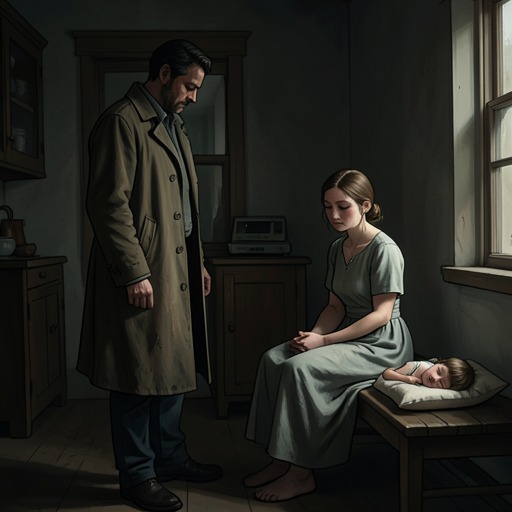
During Pip’s illness and recovery, Joe visits with news that he and Biddy are now married. Biddy had encouraged him to go to Pip as soon as word came that Pip was ill, and Joe presents her urgent kindness as the reason he came without delay. The marriage is revealed when Pip returns to the old home and finds the best parlour in use, its open window bright with flowers. Joe and Biddy stand together, arm in arm, and Biddy announces that it is her wedding day and that she has married Joe. Their union brings together two figures Pip had emotionally left behind, while showing that their household has continued to live and change in his absence.
Biddy’s ending is not a prize awarded to Pip or a resolution of his frustrated love for Estella. She chooses Joe, raises a family with him, and remains able to welcome Pip without surrendering the life she has made. When Pip meets her after dinner, their little girl sleeps in her lap; he asks Biddy to let him have the child as a godchild, or at least to lend her to him at times. The request places him once more within their family circle, now as a visitor and friend rather than its imagined center.
As a character, Biddy is defined by an unobtrusive combination of practical competence, continuing education, care, and self-direction. Her work as a first teacher makes her part of Pip’s earliest effort to rise through learning; her service to the Gargery household sustains the home he grows ashamed of; and her independent choice of work and marriage marks a life that does not revolve around his expectations. Her contrast with Estella is not simply one of appearance: Biddy’s kindness and loyalty are present in the ordinary acts Pip overlooks until loss and hardship teach him their worth.